


Taps, Tanks, and Windmills: Exploring William Kamkwamba’s Windmill at the Readers’ Club

The readers picked William's book for their next read. Before we dive into the book, we had a preliminary discussion

Some context to begin with:
A real life story set in Malawi (a landlocked country in Africa) A 14 year old built a windmill out of scrap to generate electricity to solve a big problem.
What was the problem? Drought because of insufficient water supply in farms resulting in less food for everyone.
What if the water supply could be fixed? Crops would grow better, more food.
Was it a lack of water or was it just a problem of getting water to the farmland? There was a lot of water in the underground aquifer. The problem was how to pump the water from underground to the farm.
Turn on the tap and water flows. Ever wondered how water reaches our homes?
One of the readers from one of the major cities in the north shared what she has learnt and observed.
"Water is pumped up to our over head tanks and water comes to our taps from there. We have RO units in place to purify the water and provide clean drinking water. How does water reach our community? I don't know."
"Our community gets water from water tankers. We do have a connection for river water but we don't get enough supply and hence need to buy water," added another.
As we exchanged what we have observed, one common element emerged. All of us used pumps to pump water up to the over head tanks. Electricity came in handy.
So why did the same concept not work in Malawi?
Simple. Back in 2001-2002 when this story in this book took place, there was no electricity.
How did William Kamkwamba's invention of the windmill help?
It helped generate electricity.
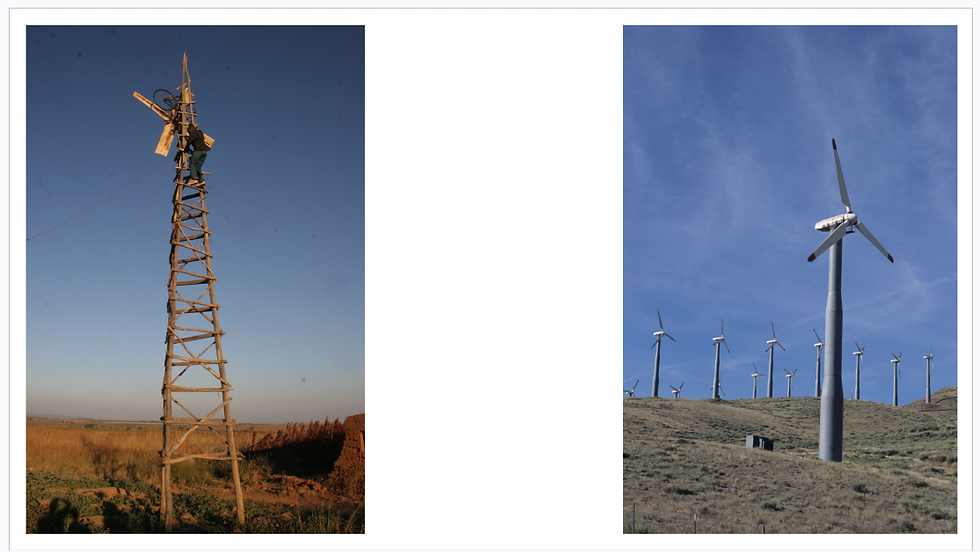
As the children looked closely conversations began to take shape. Words such as 'wood', 'scrap', 'bike', 'engine' and so on started coming up.
Why wood?
That question led to the next phase of exploration about life in Malawi. Resources were limited.
Gradually, the discussion moved on to what it must be like to be right on top. One of the readers who was terrified of heights was in awe that a 14 year old could climb up so high on a rudimentary structure. That led to the question,
How tall was the structure?
Armed with these and many more questions, we are all set to read this amazing book.
Stay tuned for more updates on our reading experiences at the Advanced Readers' Club at Talking Circles.
The Guided Reading and Writing Club is designed for children in grades 3-5 to help bridge the gap between loving a story and crafting one.
The Advanced Readers' Club is a book club for the grades 5-9 — perfect for avid readers who love analyzing and discussing plots with other book enthusiasts.
The Young Writers' Club is a specialized writing program designed to transform teenagers from hesitant writers into confident writers and critical thinkers.


Comments